
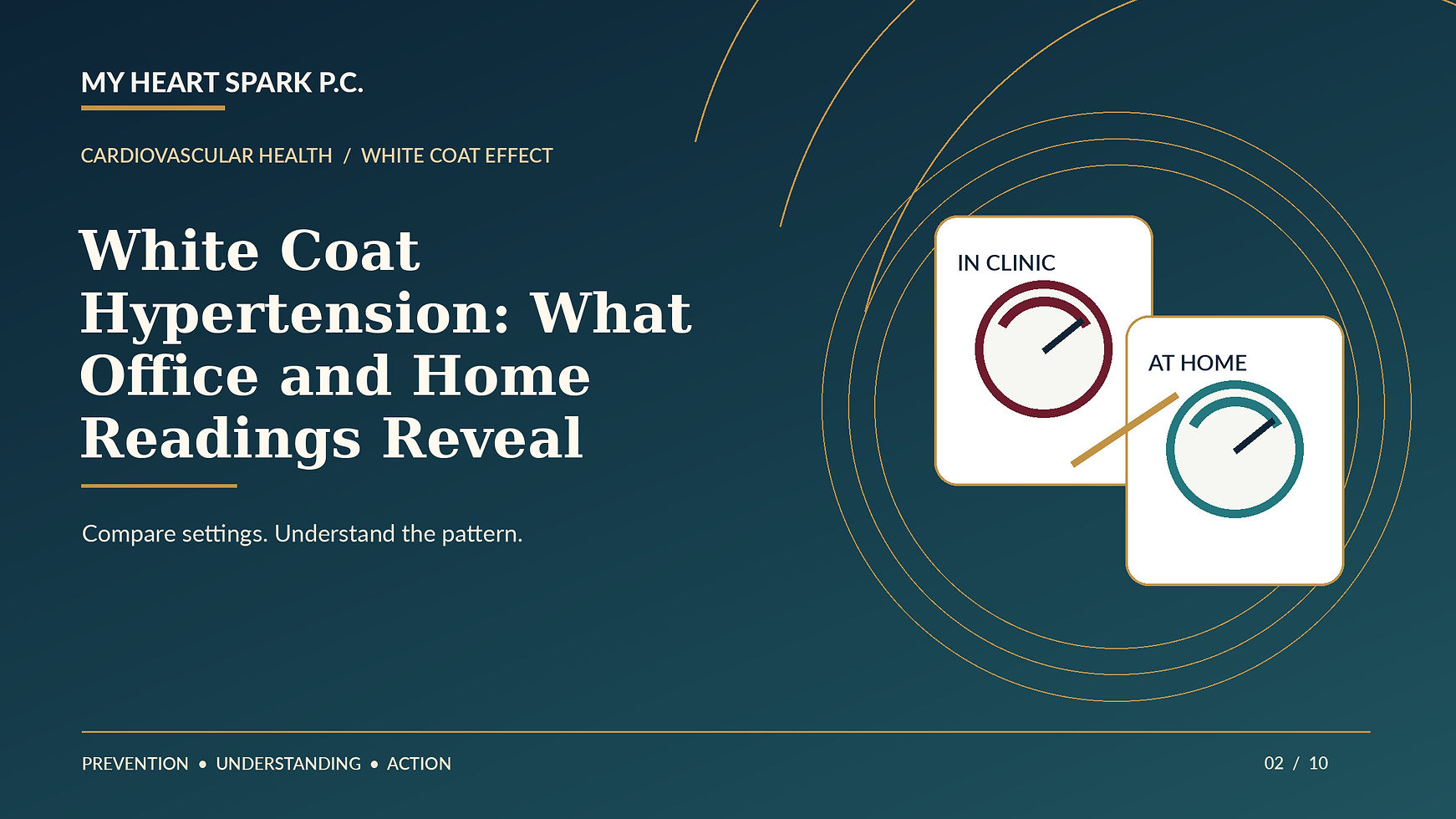
White Coat Hypertension: What Office and Home Readings Reveal

A higher pressure at an appointment than at home can indicate a white coat effect. Repeated measurements can clarify the pattern.
What affects interpretation
The difference between sustained hypertension and office related elevation informs long term risk and treatment choices. The interpretation also depends on the timing of symptoms, medical history, current medicines, examination findings, and trends across previous tests. The next step should connect the clinical question to a meaningful decision.
What you can do next
Ask whether structured home readings or a 24 hour ambulatory monitor would confirm the pattern. Prepare the relevant reports, dates, medicine doses, and a short symptom or measurement timeline. Ask what information would change the recommendation and how progress will be measured.
Questions worth asking your clinician
What is the most likely explanation, and what other possibilities should be considered? Which test or treatment would change management? What are the expected benefits, potential harms, and alternatives? When should we revisit the plan? An individualized answer considers your medical conditions, personal priorities, and access to care.
When to seek urgent care
Seek immediate evaluation for chest pain, severe breathlessness, stroke symptoms, confusion, fainting, or very high blood pressure accompanied by acute symptoms.
Exploring a My Heart Spark P.C. consultation
My Heart Spark P.C. provides information about cardiovascular consultations, prevention, and clinical record review at https://www.myheartspark.com/. Bring original reports and a complete medication list to help the clinician address a focused question. Clinical appropriateness and service availability determine the care pathway.
Guidance for further reading: https://www.jacc.org/doi/10.1016/j.jacc.2025.05.007
Patient education prepared October 10, 2026. Information is intended to support a discussion with a licensed treating clinician and is not an individual diagnosis or treatment order.
Comments